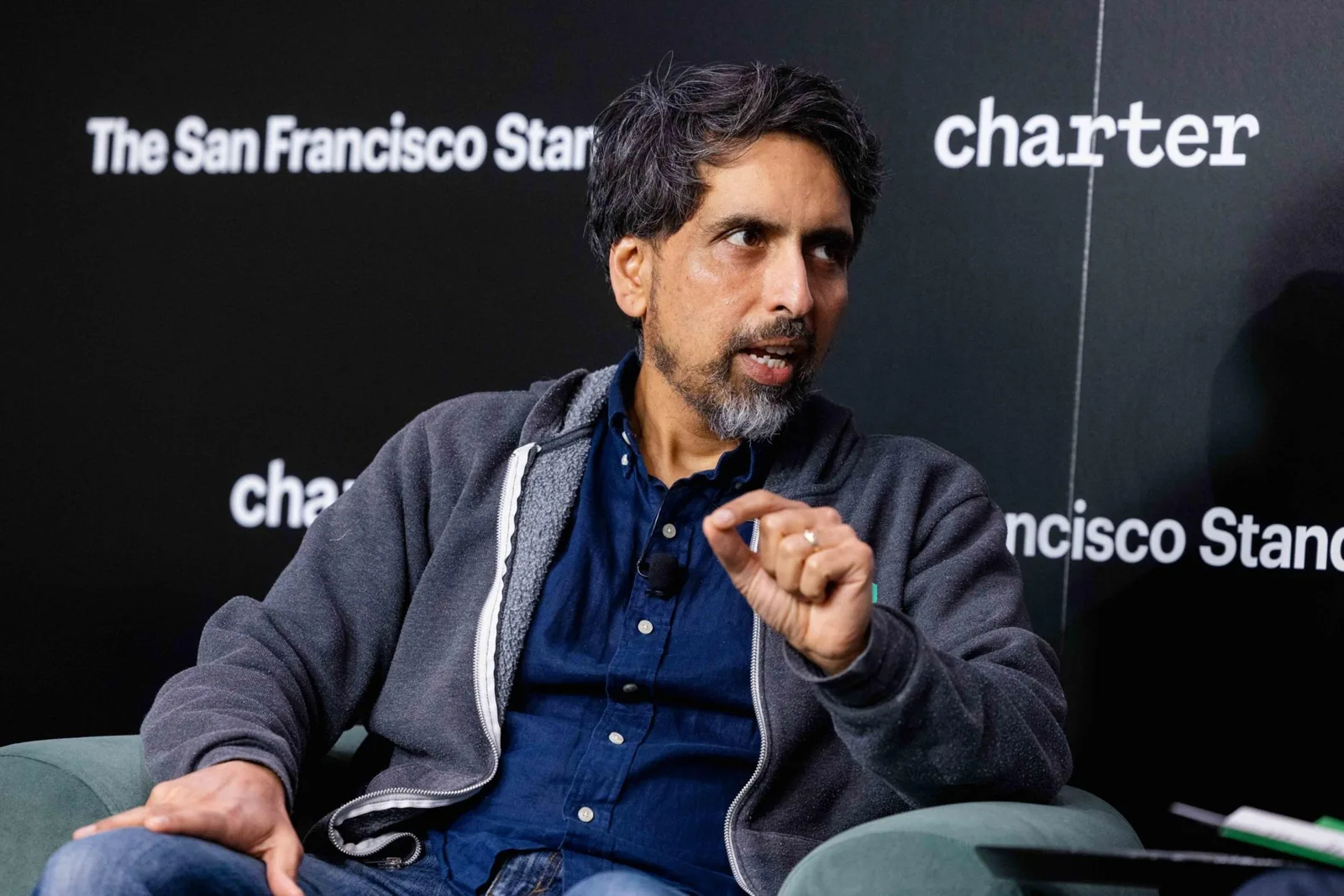
Last week, we dove into a new $10,000 “elite degree” being developed by Sal Khan in partnership with organizations like Google and Microsoft. The program, part of the Khan TED Institute, is designed to deliver an AI-focused bachelor’s degree at a fraction of the cost of traditional universities, with tuition projected to come in under $10,000 and a curriculum shaped directly by employers.
That price point makes a lot of sense when you compare it to the current system. The average cost of attendance at a private four-year college in the U.S. now exceeds $80,000 per year, while even in-state public universities can cost tens of thousands annually when you add in room and board, books, and other fees. At the same time, total U.S. student loan debt has surpassed $1.7 trillion, with the average borrower graduating with tens of thousands in loans.
Of course, college graduates still earn more on average than non-graduates, but the return is becoming increasingly uneven, with significant variances observed across major, institution, and career path. That’s what makes this moment different. The more important implication isn’t just the existence of a cheaper degree; it’s what this exorbitant price forces us to confront. If a degree that claims to rival elite institutions can be delivered for a comparative bargain, then the real question isn’t whether this new model will succeed.
It’s what, exactly, students have been paying for all along.
College Has Always Been a Bundle, Not a Product
One of the biggest misconceptions about higher education is that it’s a single, unified offering. In reality, college has always bundled together multiple distinct components that are often treated as inseparable: the credential itself, the actual skills developed through coursework, and the network or access that comes from being part of a particular institution. For decades, these three elements moved together. Attending a strong university meant gaining all three — credibility, competence, and connections — in a single package.
What makes the recent news different is that this bundle is starting to break apart. Programs like the Khan TED Institute are explicitly designed around this idea. Rather than replicating the traditional four-year experience, they focus on delivering a subset of that bundle — primarily skills and employability — at a dramatically lower cost. As Khan himself has framed it, the goal is to shift away from measuring time spent in a classroom and toward demonstrating what students can actually do.
That distinction matters; once you separate these components, you can start to evaluate them independently.
The Credential Itself is No Longer Enough
There’s a tendency to overcorrect in conversations like this and assume that degrees are becoming irrelevant, but that’s not true. Credentials still play a significant role in signaling baseline competence, persistence, and the ability to operate within structured systems. For many industries, they remain a prerequisite to even pass through screening.
What’s changing, though, is exactly how far that signal goes. As access to higher education has expanded, the degree itself has become less differentiating on its own. At the same time, labor market data shows a growing disconnect between degrees and outcomes: millions of Americans who carry a share of that enormous student debt we mentioned earlier are, in fact, underemployed or working in roles that don’t require a degree.
Skills: an Emerging Chasm
This disconnect between the credential itself and what it equips a student to perform doesn’t invalidate the degree. It just reframes it. Put another way, credentials may open the door, but skills determine what happens next. This is precisely where the divergence between students is becoming more pronounced.
Picture two students, both graduating from the same institution, with the same major and similar grades, but with vastly different levels of actual ability. This occurs because skill development isn’t just a function of exposure to material; it depends heavily on how students engage with that material, how often they receive feedback, and whether they actively refine their thinking over time.
This is the very kind of gap programs like the Khan TED Institute are trying to address. By building a curriculum in partnership with employers and emphasizing competency-based progression, the model attempts to ensure that students can demonstrate real-world capability rather than simply complete coursework.
But even here, there’s a limitation: structure and curriculum alone don’t guarantee mastery. Without consistent feedback and deliberate practice, students can still plateau, regardless of how modern or industry-aligned the program appears.
The Network Still Exists — But It’s Unevenly Distributed
The final piece of the traditional college bundle, the network, is often the most difficult to replicate and the least discussed openly. Top institutions provide not just education, but access to peers, alumni, recruiting pipelines, and even opportunities that can compound years down the line.
This is where newer models still face a meaningful challenge. While online communities and alternative programs are expanding educational access in new ways, they don’t yet fully replicate the density or signaling power of elite networks. That doesn’t mean they won’t — after all, we here at Grassroot place great importance on community-based learning. What is apparent, however, is that today, this component of college remains unevenly distributed.
That’s a big reason why the traditional educational system persists. Not because it is perfectly efficient, but because certain parts of its value proposition are still difficult to unbundle.
The Real Shift: From Where to How
When you step back, the most important change we can decipher from this news isn’t the emergence of cheaper degrees. It’s the shift in how value is created.
For a long time, the dominant question was:
Where are you learning?
That question is becoming less important; the more relevant question now is:
How effectively are you learning?
Students today have access to more content, programs, and pathways than ever before. What differentiates outcomes is not access, but rather, execution. It’s whether students can identify their weaknesses, receive timely feedback, and improve in a structured way over time.
That layer has always mattered. It’s just becoming more visible now that the rest of the system is evolving.
The Grassroot Difference
As education becomes more flexible and more unbundled, the need for effective learning systems becomes more — not less — critical.
At Grassroot, our focus is on solving the part of the equation that remains constant to learning:
- Clear, real-time feedback so students understand where improvement is needed
- Adaptive practice that targets specific gaps in understanding in the pursuit of goals
- Performance insights built around a student’s particular learning personality
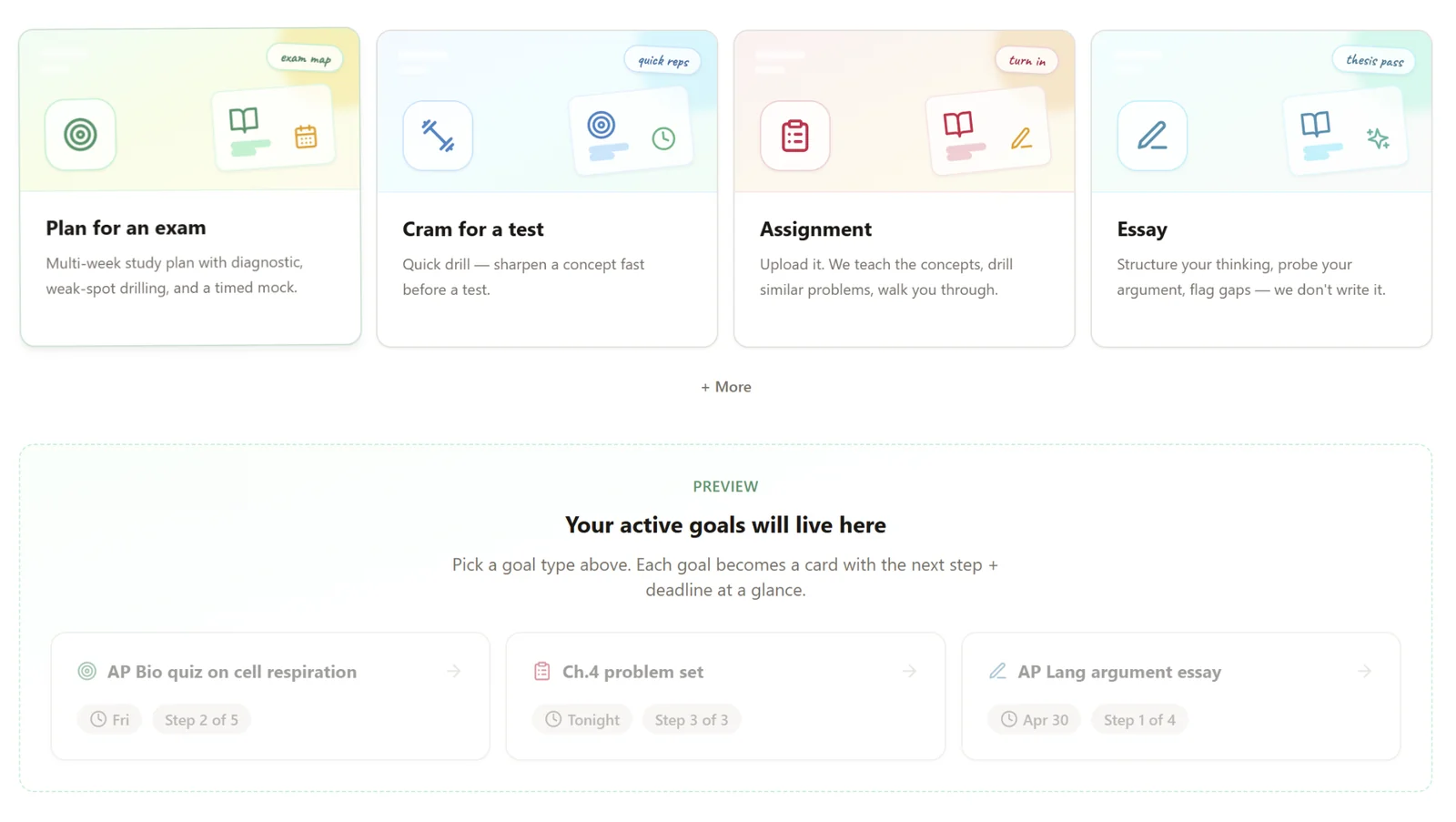
This matters because the entire premise of college — whether traditional or alternative — is tied to outcomes. Students aren’t just enrolling in classes; they’re trying to achieve specific goals: strong academic understanding that can translate into college success, acceptance into competitive programs, or readiness for high-paying careers. Hitting those goals early, such as by earning 4s and 5s on next week’s AP exams, can meaningfully reduce the number of courses a student needs to take in college, lowering time and cost alike.
Grassroot is built around making those goals explicit and measurable. Instead of studying broadly, students can track exactly where they stand relative to outcomes that matter and focus their effort accordingly. After all, whether a degree costs $10,000 or $80,000, the outcome ultimately comes down to one question:
Can you consistently improve and reach the benchmarks that move you forward?
The rise of the $10,000 degree doesn’t mean college is disappearing. But it does expose something that has been true for a long time: higher education is not a single product; it’s a bundle of different value components that are now starting to separate.
For students, that creates both opportunity and risk. More options mean more flexibility, but they also require clearer judgment about what actually drives outcomes. Cost matters. Credentials matter. Networks matter. But none of them replace the core ability of learning effectively.
As options continue to expand, it is this ability that’s becoming the one true advantage that compounds. Try Grassroot now, and you’ll see why.
Works Cited
- Entrepreneur. This CEO Is Creating a New Elite College Degree With Google and Microsoft — And Offering It for Only $10,000 (April 2026)
- Khan Academy Blog. Introducing the Khan TED Institute: A New Approach to Higher Education (2026)
- Inside Higher Ed. Sal Khan, TED, ETS Eye the Degree Market (April 2026)
- Education Data Initiative. Student Loan Debt Statistics (2026)