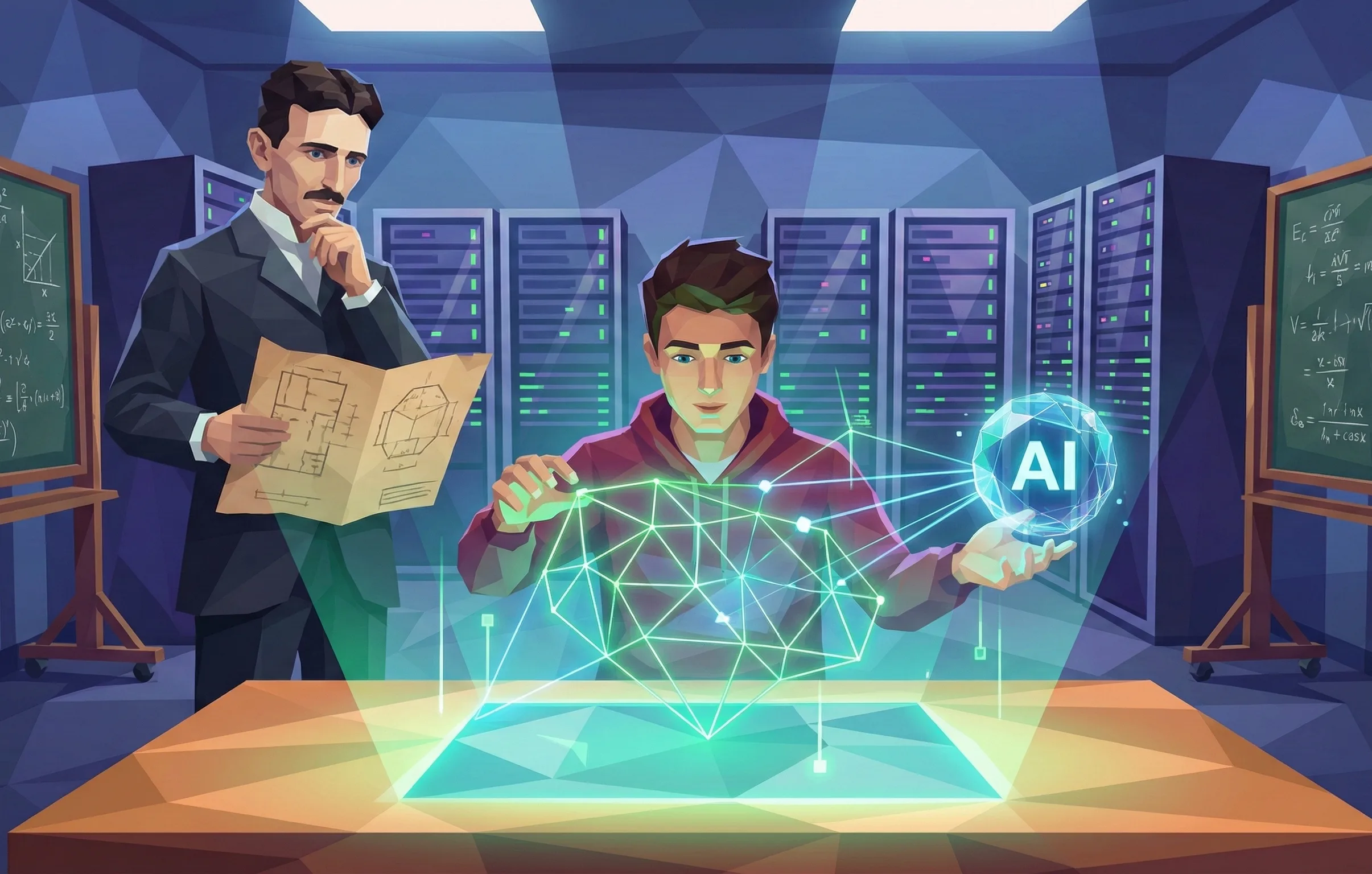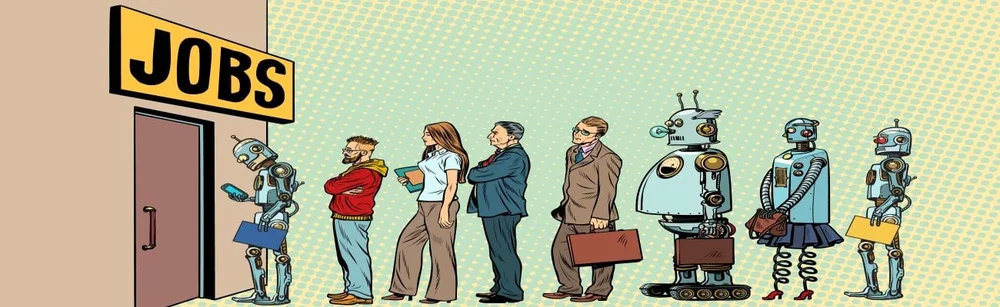
Oracle's latest layoffs are not just another tech headline. They are a preview of what happens when a large company redirects capital, attention, and strategy toward AI infrastructure while rethinking how much human labor it still needs in other parts of the business.
At first glance, that can look contradictory. Why would a company spend so aggressively on AI, cloud capacity, and data centers while cutting so many people at the same time?
It is not a contradiction. It is a redesign.
And for students and parents, it is the kind of redesign that matters long before graduation day arrives.
Job Redesign, Not Just Job Loss
Back in October, we wrote about how AI would not just eliminate jobs, but reshape how entire industries operate. Oracle is a strong example of that shift becoming visible in real time.
The company is not pulling back from growth altogether. If anything, it is doubling down in areas tied to future AI demand. What is changing is where the company believes leverage now comes from. More capital is going into compute, infrastructure, and systems. Less is going into keeping older team structures intact.
That matters because the roles being affected are not only the stereotypical jobs people assume are easiest to automate. Reporting on this round of cuts has pointed to functions across cloud, services, operations, and technical teams. In other words, the shift is not about one narrow category of work disappearing. It is about workflows being compressed and reorganized.
Companies are increasingly asking a different question than they used to. Not just, "Who should we hire?" but "What does a team even need to look like now?"
That question is quietly redefining the labor market.
Why This Matters for Current Students
It is easy to read a story like this and assume it only matters to people already working in tech. That is the mistake.
By the time many current students graduate, this kind of headline will not feel unusual. It will feel normal. The traditional playbook has long been simple: work hard in school, gain expertise in a field, and translate that expertise into a stable career.
What is changing is not the value of learning. It is the durability of narrow expertise when tools and workflows keep moving underneath it.
A student can spend years becoming strong at a specific type of work and still discover, upon entering the workforce, that the field has already shifted toward a different set of tools, expectations, and team structures. Not because the field disappeared, but because the way the field gets executed changed faster than expected.
That creates a new kind of risk. Not the risk of falling behind completely, but the risk of being just slightly out of sync with how work is actually being done. In a fast-moving system, that gap compounds.
So What Should Students Do Differently?
If the environment is changing faster, preparation has to change too.
Students may want to think a little less in terms of "What do I want to study?" and a little more in terms of:
- How quickly can I get up to speed on a new topic?
- Can I recognize when I do not understand something and fix it quickly?
- Am I practicing the application of knowledge, or only memorizing information?
- Can I adjust when the tools around me change?
Those sound like subtle shifts, but they are not. They change the center of gravity of learning. The real edge increasingly comes from adaptability, not just coverage.
For parents, this changes what progress should mean. Progress is not only better grades or more completed assignments. It is also whether a student is learning how to navigate unfamiliar problems, identify their own weak spots, and improve efficiently without waiting too long for outside intervention.
Where Most Learning Models Fall Short
The problem is that many learning environments are still optimized for coverage, not adaptability. Students move through material at a fixed pace, feedback arrives later than it should, and weak spots often stay blurry until there is very little time left to respond.
That kind of system can still produce acceptable results. But it does not necessarily build agility. And agility is what this moment increasingly demands.
If Oracle's layoffs are a signal that work is being reorganized faster than students expect, the natural question is how students can keep up. At Grassroot, our focus is on making learning more responsive so students can practice that adaptability directly. That includes:
- Real-time feedback so gaps are identified immediately
- Adaptive problem sets that adjust to the student's level
- Clear visibility into strengths and weaknesses so effort is targeted, not wasted
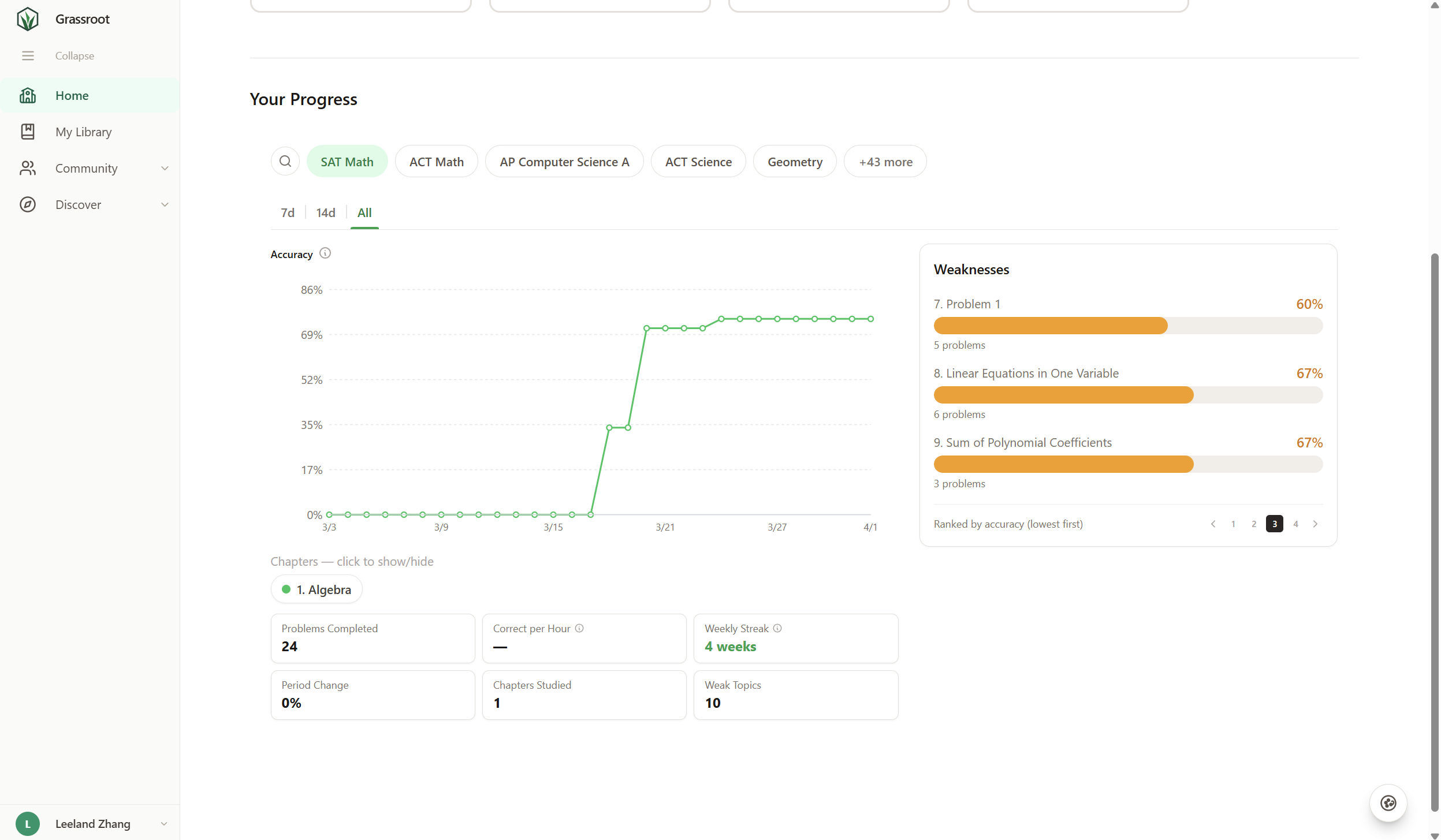
The goal is not only better performance on the next quiz or exam. It is to help students become faster at learning itself, because that is the skill that compounds when industries keep shifting.
The Real Value of Paying Attention
The Oracle story is not important because of Oracle alone. It is important because it shows how quickly the rules for future graduates are changing and how quietly that change is already underway.
Students who recognize that early are better positioned. Not because they can predict the future perfectly, but because they can build the kind of flexibility that survives change.
That is what this comes down to: not fear, and not urgency for its own sake. Just clarity.
The edge is no longer only in what you know. It is in how quickly you can update what you know. That is something you can start building now with Grassroot.