AI is no longer just a trendy buzzword. Purdue's recent implementation of AI competency requirements for students to graduate indicates that with each passing year, the technology is becoming a core educational competency of greater importance. Purdue may be just the first major U.S. university to embed AI requirements into degree requirements for all undergraduates, but its policy signals a broader shift in how education prepares students for the future.
Under these changes, undergrads at Purdue won't just take a single class on AI; rather, they'll be tasked with demonstrating their understanding of AI in a way meaningful within their respective disciplines, from humanities to engineering. The hope is that this will help students learn how to use, evaluate, and think critically about AI tools and systems in real-world contexts.
Why AI Literacy Matters for Today's Learners
At its most basic, AI refers to computer systems or software that can perform tasks that have traditionally required human intelligence: recognizing language, identifying patterns, making predictions, analyzing large datasets, and generating responses to complex prompts. Modern AI tools like ChatGPT use large datasets to simulate human-like responses. But AI isn't a panacea. It carries strengths and weaknesses, and understanding how it works is becoming increasingly essential across the careers and daily lives of people around the world.
Research and global policy discussions have emphasized that AI literacy doesn't simply involve knowing how to click buttons. What it really comes down to is understanding AI's capabilities, limitations, ethics, and most importantly, impact on society. Last year, a report from the World Economic Forum urged education systems to shift from traditional digital literacy to AI literacy because of how widespread generative AI tools are becoming in schools and workplaces, especially without robust guardrails. Such oversight includes evaluating AI output quality, examining for potential bias, and considering how AI complements broader human skills such as judgment and collaboration.
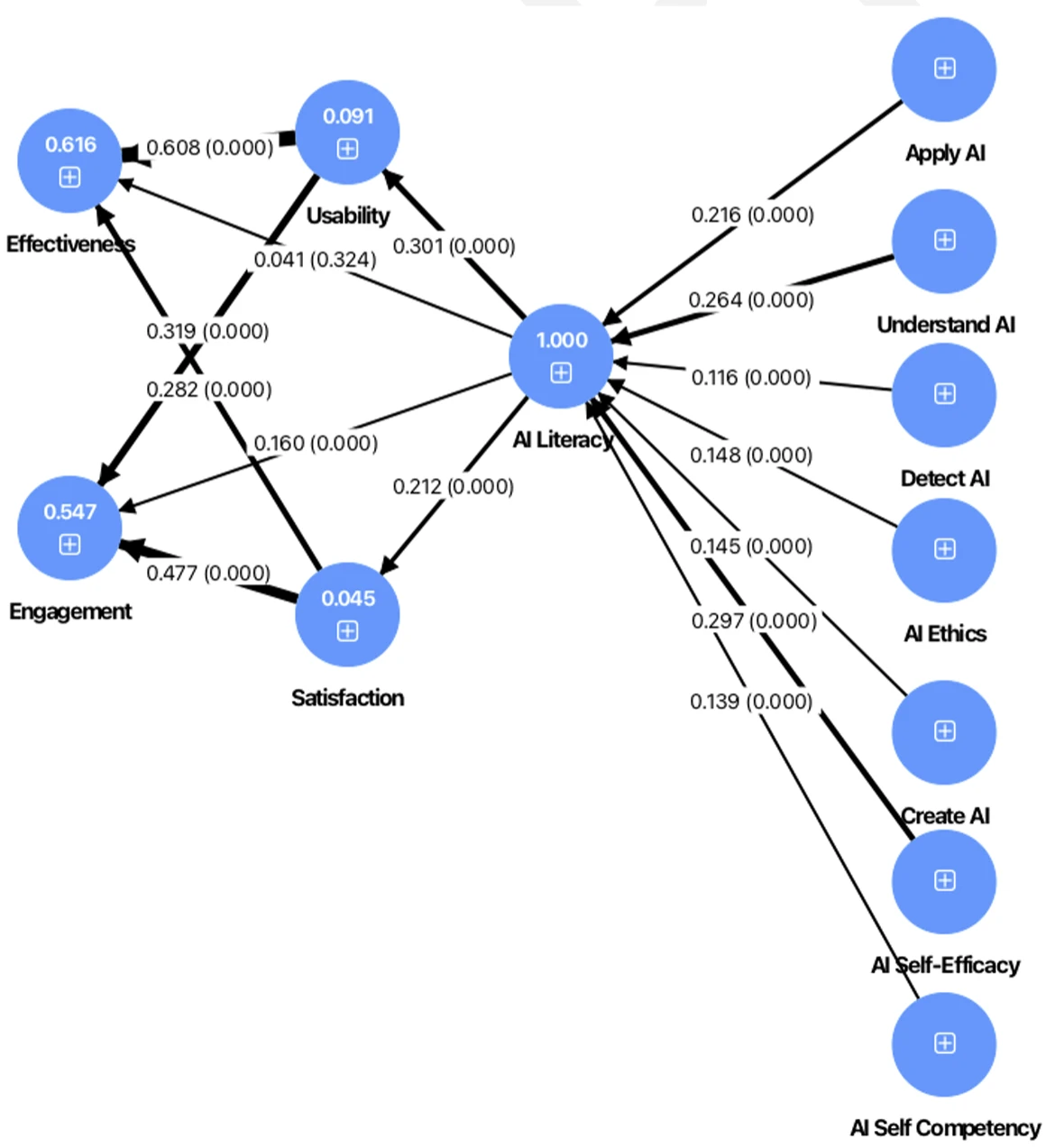
A 2025 study on AI literacy showcases that when students develop stronger understanding and practical skills in AI, which includes conceptual understanding and the ability to apply AI tools thoughtfully, they can engage more deeply. Further, they tend to feel more confident and may experience increased satisfaction and perceived learning effectiveness.
But learning practical skills in AI is only part of the puzzle. Much complexity goes into AI literacy, as the below figure from the 2025 study illustrates.
With that said, the question becomes: "What do I as a learner need to know about AI?"
The Top 3 Things to Know to Sharpen Your AI Literacy
1. Understanding AI Is Becoming a Core Competency, Not Simply an Add-On
Purdue's graduation requirement reflects a larger trend: AI literacy is transitioning from an optional elective to a standard educational expectation, not unlike how computer skills became essential for students to succeed in the early 2000s. Tool use alone is no longer sufficient. Students are increasingly expected to understand and evaluate the AI outputs they receive, not simply rely on them for answers.
This shift is not limited to university-level education, either. Systematic reviews of AI literacy highlight that integrating AI learning early in K-12 education, both conceptual and applied, is crucial for preparing students to interact with AI responsibly and ethically as future professionals and citizens.
2. Employers Expectations Are Fundamentally Changing
Industry experts now recognize that future job markets will demand human skills complemented by AI fluency. As we've explored, this workplace shift toward greater AI usage encompasses creativity, complex problem solving, ethical reasoning, and strategic thinking about when and how to use AI effectively. AI literacy, ultimately, can help students become partners with technology rather than passive consumers, and it's critical for helping them stay ahead.
3. Responsible AI Use Requires More Than Just Access to Tools
The World Economic Forum is not the only institution pushing for greater AI literacy. Talk to any sample of K-12 or post-secondary educators, and a sizable portion are bound to express concern over how their students are using AI. To allow students to truly understand the ramifications of AI usage, AI literacy must include critical thinking, ethical awareness, and evaluative judgment, not just the know-how behind a particular functionality. Remember, generative AI can produce plausible but incorrect information, and learners require strategies to detect, question, and verify outputs.
How Learners Can Prepare for 2026 Onward
With AI becoming a graduation requirement at universities and a core workforce skill, there is a natural follow-up to the question on what learners need to know: "How do I actually go about learning?"
Here are four practical, high-impact strategies we at Grassroot recommend:
Learn With Context, Not Just Tools
Understanding the "Why?" behind AI — how models work, their potential bias, and where they succeed or fail — helps learners use AI more effectively and ethically.
Practice Responsible Prompts
Practicing the crafting of thoughtful prompts and learning to evaluate AI responses builds critical thinking and deep understanding, rather than encouraging shortcut behaviors that reduce cognitive engagement through offloading.
Connect AI to the Curriculum
Students should explore how AI applies in their academic areas, whether they're exploring data analysis in science courses or mulling over ethical reasoning in humanities, in order to build truly meaningful, transferable skills.
Build Reflective Skills
Keeping a reflective journal of AI interactions (i.e., what worked, what didn't, and why) can strengthen metacognitive awareness and support lifelong learning.
AI Literacy Isn't a Trend; It's a Foundation for Better Learning
At Grassroot, we believe that AI literacy should be integrated with deep thinking and learning, not treated as a separate academic competency. Our approach supports learners in developing both academic mastery and AI competence:
- Judgment-Free Engagement: Students can explore concepts and ask questions without the fear of being wrong, helping them foster curiosity and reflection rather than anxiety around learning.
- Personalized Guidance: Our learning partners adapt explanations to the student's level and connect new topics to existing knowledge, helping learners build conceptual understanding.
- Critical Evaluation Skills: Grassroot encourages students to evaluate and reason about AI outputs, not simply accept them, which mirrors the evaluative skills emphasized in emerging AI literacy frameworks.
- Scaffolded Support for Thoughtful Use: By prompting learners to articulate reasoning and connect ideas, Grassroot strengthens core skills that future education policies, similar to what Purdue has just implemented, may seek to instill.
Whether a student is aiming for college, developing their professional growth, or pursuing a deeper understanding of AI's role in society, building AI literacy alongside academic content positions them for success. AI is not just a technology to use; it's a domain of thinking that shapes how we solve problems, collaborate, and understand the world around us. That's why AI literacy belongs at the heart of education in 2026 and beyond, and it's what keeps our learners coming back to Grassroot.
Sources
- Purdue Newsroom: Purdue Unveils Comprehensive AI Strategy
- World Economic Forum: Why AI Literacy is Now a Core Competency in Education
- Yilmaz Soylu, Meryem, et al. "AI literacy as a key driver of user experience in AI-powered assessment: insights from Socratic mind." Interactive Learning Environments (2025): 1-17.
- Edmentum: AI Literacy in K-12: A Primer for Educators