As we kick off the new year, millions of students have ideated resolutions such as:
- "Study more consistently."
- "Earn better grades."
- "Spend less time procrastinating on schoolwork."
These goals come from good intentions, but they leave their ideators often falling prey to the same trap year after year: they focus solely on effort rather than the support needed to realize the goal itself. Motivation alone is limited and rarely effective unless it's paired with structures that help students succeed — particularly when learning feels like an uphill battle.
So this year, instead of resolving to study more, we at Grassroot urge you to consider this:
Resolve to get better support for learning — support that meets the learner exactly where they are, reduces frustration, and promotes confidence.
Much recent research has reinforced the notion that academic support — the guidance students receive while learning — is one of the strongest predictors of long-term academic performance and continued engagement. Not a huge surprise at first glance, but note that this observation holds true whether support comes from teachers, tutors, peers, or even well-designed learning tools.
What the Research Says About Academic Support
A 2025 systematic literature review found that behaviors such as seeking academic help and providing learning support are positively correlated with academic achievement. Put another way, students who take the initiative to seek and receive assistance — whether from peers, instructors, or support systems — tend to handle challenges more successfully and achieve better outcomes than those who go through their learning journeys solo. Further, these behaviors are buoyed by positive attributes such as a sense of belonging and accessibility of support, as demonstrated by the figure below.
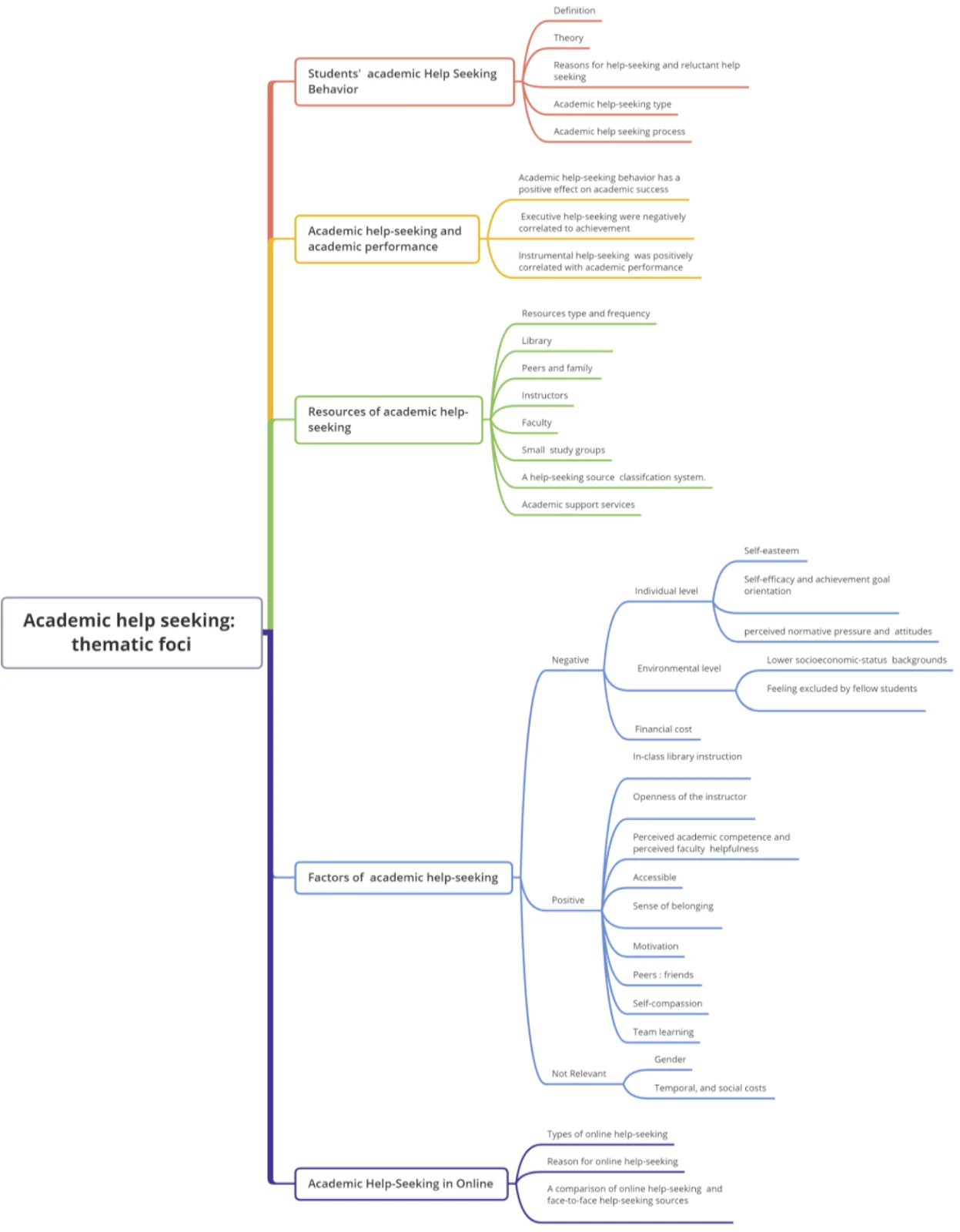
Yet, limited self-esteem and lower socioeconomic status are associated with reduced support seeking. The thing is, though, support shouldn't be a luxury — it should act as an accessible strategy that changes the way students learn and perform.
This is because multiple findings in educational research have demonstrated that:
- Support boosts academic engagement, which in turn drives persistence and powers deeper learning
- Help-seeking itself is a skill strongly connected to motivation and confidence
- Students who receive academic support often display improved self-efficacy (i.e., as demonstrated by adherence to the belief "I can do this"), which predicts future achievement in learning
So, rather than telling students to simply "try harder", more effective approaches must help them access learning experiences that support them exactly where they're struggling — and guide them to ask for help when it's needed.
Why Simply "Studying More" Isn't Enough
It's easy to assume that simply spending more hours cranking through homework or scouring a textbook will yield better results. But learning isn't just about putting in time — it's about how that time is spent.
We've all seen what can happen without proper academic guidance:
- Students staring at a problem for hours without making any progress
- Learners who "study" by highlighting text without actually understanding the words
- Pupils spending hours memorizing terms without connecting them to genuine meaning
These fruitless patterns don't stem from a lack of effort — they're problems of engagement and support.
True academic growth, as we've written on previously, can happen only when students work through confusion, receive timely feedback, and revise their understanding with guidance — a process that turns mistakes into opportunities for learning.
How AI Is Poised to Improve Academic Support in 2026
AI has enormous potential to help more students access meaningful academic support — not by supplanting the role that teachers play, but by augmenting existing supports that help students persist and thrive.
Unlike static worksheets or one-size-fits-all forms of instruction, AI can:
- Provide real-time clarification when students are stuck
- Adapt explanations to a student's current understanding and learning style
- Offer judgment-free practice and feedback
- Encourage students to ask questions instead of guessing repeatedly
But there's an important caveat to consider: not all AI support is created equal. Resolutions to use AI more won't help unless the tool in question is built to enhance thinking, not shortcut it.
Effective AI learning tools must:
- Support reflection
- Guide reasoning
- Reinforce understanding
- Promote confidence and engagement
These, uncoincidentally, are the same elements research has demonstrated as being central to academic success.
The Grassroot Method: Support That Builds Thinking, Not Pressure
At Grassroot, our tutors embody these evidence-based principles, while being accessible around the world and at any time of day — precisely to help students succeed in 2026 and beyond. Here's how Grassroot underpins New Year's resolutions with real support:
Always Available, Judgment-Free Support
Students can ask questions any time — without fear of judgment — so they're more likely to seek help instead of avoiding it. This mirrors research showing that proactive help seeking is linked to improved learning outcomes.
Personalized Guidance
Rather than generic answers, Grassroot adapts explanations to a student's knowledge and experience — helping them understand the why a concept. Support that matches a student's level increases engagement and self-efficacy — two key predictors of academic success.
Encouragement Through Difficulty
When students encounter a tough concept, Grassroot doesn't just provide an answer — it offers morale boosts and step-by-step reasoning. This kind of emotional and cognitive support correlates with better sustained engagement and persistence.
Progress Tracking
Tools that measure deeper engagement — such as concept mastery or reasoning persistence — help make resolutions measurable in ways that matter more than the number of hours logged or pages read.
A Better 2026 Resolution
Instead of saying,
"I want to study more."
We encourage learners to make the following affirmation:
"I want to study smarter — with the kind of support that helps me think, not just memorize."
That subtle shift — from pressure to support — is the real gamechanger here.
Support fuels confidence. Confidence fuels effort. Effort fuels achievement. That's not just motivational advice — it's a process backed by research and now enabled by thoughtful, personalized AI like what we provide at Grassroot.
New Year's resolutions are powerful if they're actionable. This year, instead of encouraging students to simply log more hours, help them connect with meaningful support that transforms their learning experience this year and beyond.
Because it's not about studying harder. It's about studying with support that helps students grow. Start learning with Grassroot today and see exactly why.
Ready to make 2026 your best learning year yet? Explore Grassroot and discover what learning feels like when you have support that meets you exactly where you are. Start learning →
Source
Li, R., Che Hassan, N., & Saharuddin, N. (2025). College Student's Academic Help-Seeking Behavior: A Systematic Literature Review. MDPI Behavioral Sciences. https://www.mdpi.com/2076-328X/13/8/637