OpenAI just announced ChatGPT for Teachers, a free workspace for K-12 educators through June 2027. The promise: easy lesson planning, file uploads, and collaboration so teachers can spend more time with students. It comes with guardrails aligned to OpenAI's AI Literacy Blueprint and learning resources through the OpenAI Academy.
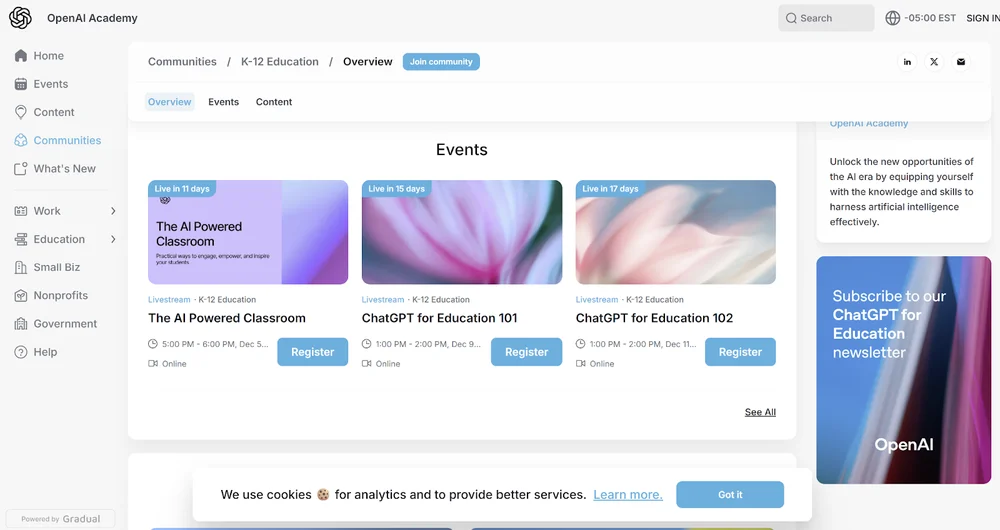
Three years after ChatGPT's debut, most educators already lean on AI for brainstorming, drafting assignments, or pacing lessons. Students use it even more. But AI's accuracy and the temptation to copy-paste answers raise familiar questions: are we improving instruction, or just speeding up shortcuts?
What ChatGPT for Teachers Actually Does
ChatGPT for Teachers is purpose-built for educators. It focuses on:
- Drafting lesson plans, assignments, and differentiated materials.
- Adapting tone, reading level, and scaffolding to match students.
- Collaborating with colleagues in a shared workspace.
- Integrating with Google Drive and Microsoft 365 so teachers can import and organize files.
It is, essentially, a productivity suite. The upside is flexibility: teachers can mold it to their context. The catch is that impact depends on a teacher's comfort level with AI prompts, classroom goals, and the safeguards they set.
Enter Khanmigo: A Different Bet
Khanmigo takes a dual approach: tools for teachers and tutoring for students. Built on Khan Academy's content library, it supplies ready-made lesson hooks, exit tickets, and real-time progress signals for teachers, while giving students an AI tutor that sits on top of that curriculum.
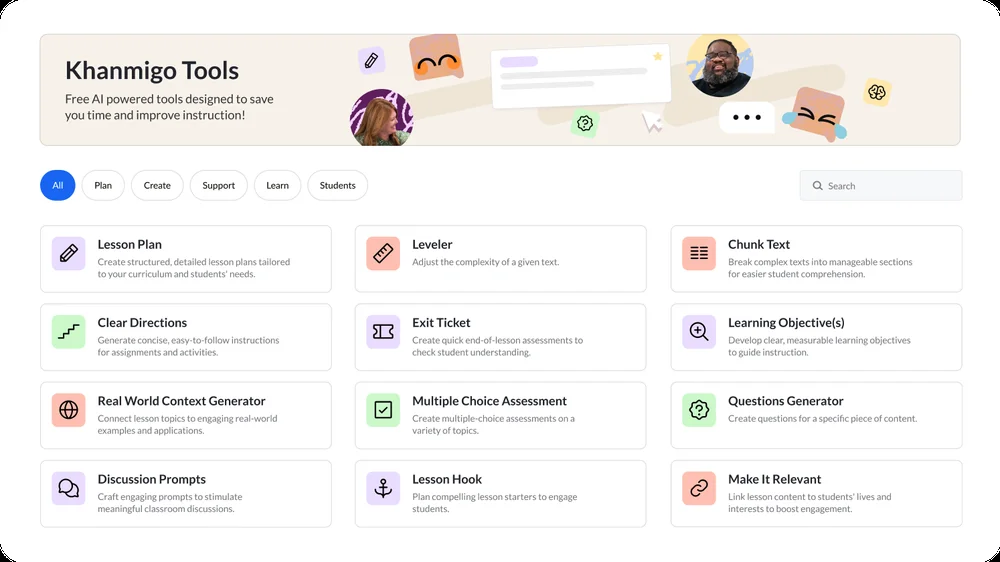
By offering a plug-and-play student experience, Khanmigo lowers the learning curve for teachers. But it is bounded by the subjects and formats in Khan Academy's library. That means less flexibility to handle niche topics or highly personalized learning paths.
How They Stack Up
Adaptability vs. Guidance
ChatGPT for Teachers is more open-ended. Educators can feed in syllabi, rubrics, and preferences, then co-create materials. Khanmigo is more guided: it nudges teachers into pre-defined flows (like exit tickets or leveling text complexity) while tutoring students directly.
Classroom Readiness
ChatGPT for Teachers assumes teachers will steer AI responsibly. That keeps it flexible, but success hinges on teacher AI fluency. Khanmigo, with built-in guardrails and content, is easier to launch in a classroom with minimal setup.
Student Experience
Khanmigo is explicitly student-facing, with performance data piped back to teachers. ChatGPT for Teachers is designed for educators; any student use is mediated through teacher-created materials or classroom workflows.
So Which One "Wins"?
It is too early to call. Khanmigo has a head start in classrooms. ChatGPT for Teachers just shipped and will need time to gather real-world results. Both highlight the same truth: teacher-facing capabilities are critical for safe, effective AI adoption.
Grassroot's Take: Start With the Learner
At Grassroot, we are building for the learner first. Teachers remain irreplaceable, but students often need help at off-hours, different explanations, or entirely new subject matter. Our tutors meet learners where they are with:
- Guided problem-solving instead of shortcut answers.
- Personalized pathways that adapt to each student's pace and interests.
- Guardrails that promote critical thinking and reduce cognitive offloading.
We see AI as a dialogue, not a vending machine. That means designing tutors that learn from students, not just lecture to them.
Want to see learner-first AI in action? Start learning with Grassroot ->